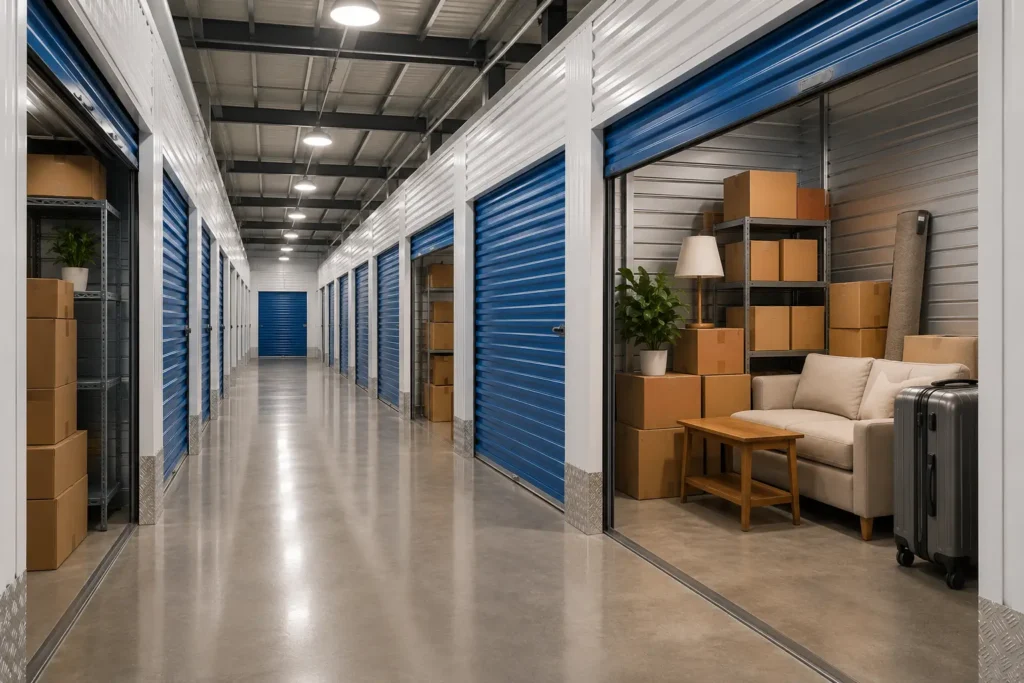
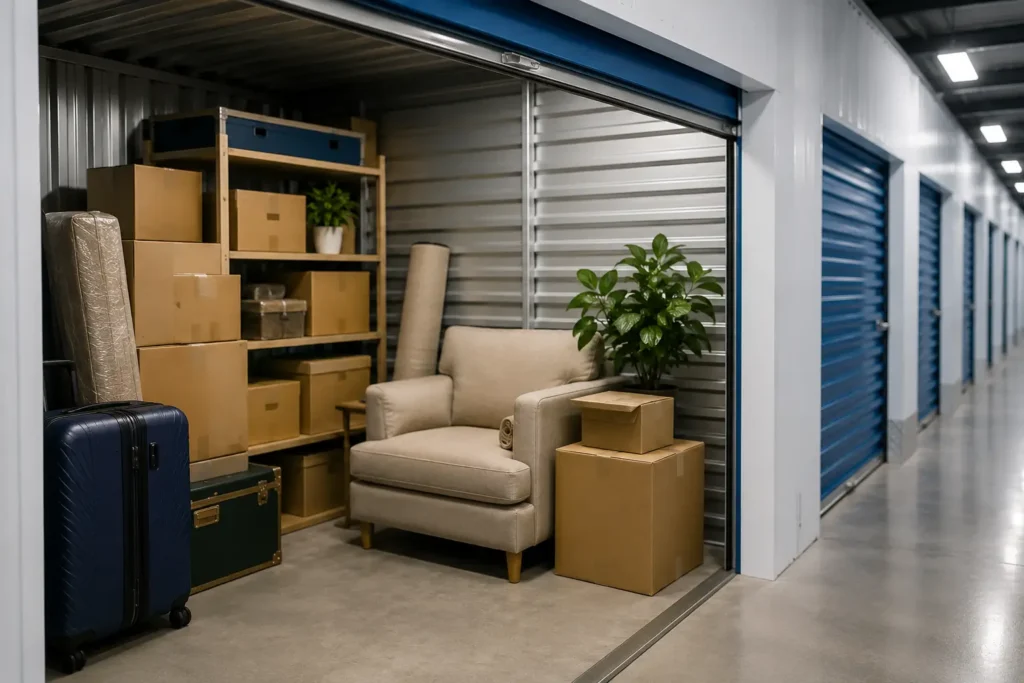
Two situations make the difference especially obvious: home renovations and extended time away from Dubai.
During a renovation, furniture and belongings often end up crammed into whatever room isn’t being worked on, exposed to dust, temperature swings from open windows, and sometimes weeks longer than originally planned. A storage unit removes that uncertainty entirely, and it also frees up space for contractors to actually work without navigating around a room full of furniture.
Extended trips away are a quieter version of the same problem. A villa or apartment left empty for two or three months in summer, air conditioning switched off or set to a minimal setting to save on bills, turns any un-cooled storage space into exactly the kind of environment described earlier. Nobody’s there to notice a problem developing until they’re back and it’s already done.
Not everything needs a storage facility, and pretending otherwise would be dishonest. The real question is which category a given item actually falls into.
Seasonal items you’ll need again within a few weeks, off-season clothes, holiday decorations, a suitcase you’ll grab in a month, are usually fine at home, assuming there’s somewhere reasonably dry and out of direct heat to put them. The turnover is fast enough that climate exposure doesn’t have time to cause real damage.
Anything you’re storing for months rather than weeks is a different situation. Furniture between moves, business inventory, important paperwork. Important documents in particular deserve real thought here: document storage in Dubai exists specifically because paper is one of the most fragile materials in a humid environment, and a fire safe at home solves theft risk without solving the slower, quieter damage that heat and moisture cause over time.
Business owners face their own version of this question, usually at a larger scale. Excess stock, seasonal inventory, records that need to be kept but rarely accessed. Business storage in Dubai tends to make sense the moment inventory starts competing with actual office or retail space, since that square footage is worth far more used for the business itself than for boxes.
Sentimental items deserve their own category entirely, separate from cost logic altogether. Family photographs, childhood belongings, anything that can’t be replaced at any price, are worth protecting properly regardless of how infrequently they’re accessed. These are exactly the items people regret losing to heat, humidity, or a break-in, and exactly the items a climate-controlled, secured unit protects best.
The calculation shifts depending on what kind of home is doing the storing.
Apartment residents are usually working with the least flexible space of all: a small storage room if the unit has one, a shared balcony, or nothing extra beyond closets already full of everyday items. There’s rarely a genuine spare room to sacrifice, which means home storage in an apartment often means overflow crammed wherever it fits, in whatever conditions that spot happens to have.
Villa owners have more room to work with, but that comes with its own version of the same problem at a larger scale. A garage or storage room in a villa is often larger, which means more items exposed to the same heat and humidity, and more square footage being used at residential rates for something that isn’t actually residential living. Bigger space doesn’t solve the underlying issue. It just means the issue affects more of what you own.
There’s a reason self storage has grown into a real industry here rather than staying a niche service. The UAE self-storage market generated around USD 602.5 million in revenue in 2024 and is projected to reach USD 859.2 million by 2030, according to Grand View Research. That kind of growth doesn’t happen because people suddenly ran out of closet space. It happens because more households and businesses are doing the actual math on climate exposure, security, and the real cost of residential square footage, and increasingly landing on the same conclusion.
Much of that growth is coming from exactly the segment this article has been describing: households and small businesses who ran the actual numbers on rent, climate risk, and security, rather than defaulting to whatever space happened to be free.
The honest cost comparison isn’t storage unit price versus zero, because home storage was never actually free. It’s storage unit price versus the rent, climate risk, and security gap of using space you’re already paying for at residential rates.
Run a simple version of the comparison: a medium storage unit rented for a year against twelve months of “free” spare-room use that’s actually costing roughly AED 1,000 a month in rent, plus whatever gets damaged along the way, plus whatever insurance won’t cover because it was sitting in a garage rather than the living room. Once all three of those get added in rather than ignored, the gap between the two options tends to close, and sometimes reverses entirely.
Once that’s the actual comparison, checking current self storage prices in Dubai against your own rent-per-square-foot number tends to be a quick exercise, and the result surprises most people the first time they actually run it.