
Moisture damage is one of the most preventable risks in self storage — but only if you plan for it before your items go into the unit. Climate control, proper packing materials, moisture absorbers, and periodic checks together create strong protection against Dubai’s humidity. If you’re comparing storage spaces in Dubai for your next move or business need, reach out to Best E-Self Storage Dubai for a facility built with these safeguards in mind.
our services

Book Your Storage Unit in Just a Few Clicks!
The best way to prevent moisture damage in storage is to combine a climate-controlled unit, moisture absorbers, proper airflow, and correct packing materials (avoid plastic-wrapping items directly). In Dubai’s humid climate — especially during summer months when humidity can climb above 60–70% — untreated storage units are highly vulnerable to condensation, mold, and musty odors within weeks if these steps are skipped.
Whether you’re storing furniture during a home move, seasonal items, business inventory, or documents, moisture is one of the most common (and most preventable) causes of damage in any storage facility Dubai residents and businesses rely on. This guide walks through every practical step — from choosing the right unit to packing techniques — so your belongings stay in the same condition you left them in.

Why Moisture Is a Bigger Risk in Dubai Than Elsewhere
Dubai’s climate combines high heat with significant humidity swings, particularly near the coast and during summer. When warm, moist air meets a cooler surface — like the inside wall of a storage unit at night, or a metal container exposed to temperature shifts — condensation forms. Left unchecked, this moisture leads to:
- Mold and mildew growth on fabric, wood, and cardboard
- Rust on metal fixtures, tools, and appliances
- Warping or swelling in wooden furniture and musical instruments
- Musty odors that are difficult to remove from soft furnishings
- Damage to paper documents, photographs, and books
For up-to-date humidity and climate data in the UAE, the National Center of Meteorology publishes regular reports that highlight how much seasonal humidity varies across emirates — useful context if you’re deciding when to move items into storage or how long you’ll need protective measures in place.
1. Choose Climate-Controlled Storage Spaces in Dubai
The single most effective step is selecting a unit designed to manage temperature and humidity year-round. When comparing storage spaces in Dubai, look for facilities that specifically advertise climate control rather than standard air conditioning, since the two are not the same — climate control regulates humidity levels, not just temperature.
Climate-controlled storage space in Dubai is especially important for:
- Wooden furniture and antiques
- Electronics and appliances
- Documents, artwork, and photographs
- Leather goods and musical instruments
- Business inventory sensitive to temperature swings
2. Use Moisture Absorbers and Desiccants
Even in a well-maintained unit, adding moisture absorbers is a low-cost, high-impact step. Silica gel packs, calcium chloride absorbers, or activated charcoal bags placed throughout your unit actively pull excess humidity from the air. For larger storage space Dubai units, distribute absorbers across multiple points rather than clustering them in one corner, since moisture tends to settle unevenly depending on airflow and proximity to walls.
Replace or recharge absorbers every 4–6 weeks in high-humidity months, and check them more frequently if you notice condensation on nearby surfaces.
3. Avoid Direct Plastic Wrapping
It’s a common mistake to wrap furniture and boxes tightly in plastic to “protect” them. In practice, plastic traps whatever moisture is already present against the item, creating a micro-environment where mold can develop even in a dry room. Instead:
- Use breathable materials like cotton sheets or moving blankets for furniture
- Choose cardboard boxes over sealed plastic bins for soft goods (cardboard allows some airflow; plastic bins trap condensation)
- If plastic bins are necessary for pests or spill protection, leave lids slightly ajar or add ventilation holes, and pair with a desiccant inside
4. Elevate Items Off the Floor
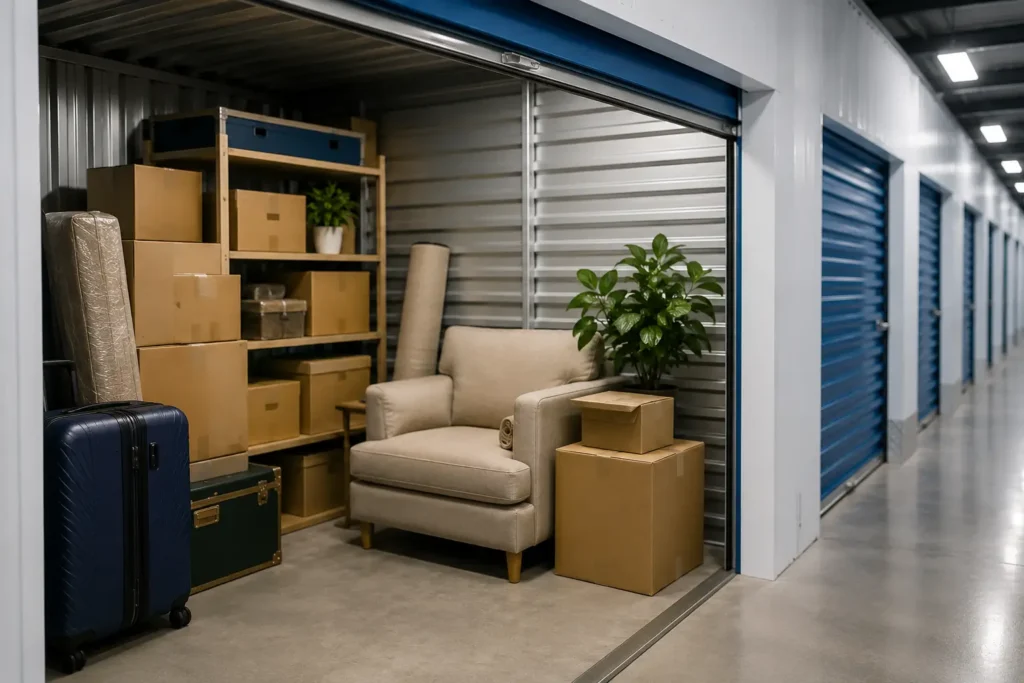
Ground-level condensation and, in rare cases, minor water seepage are risks in any facility. Use pallets, shelving units, or plastic risers to keep boxes and furniture a few centimeters above the floor. This simple habit protects against moisture that collects at ground level, particularly in units without raised flooring.
5. Maintain Airflow Inside the Unit
Packing a unit too tightly restricts air circulation, which allows humidity to build up in pockets rather than dissipate. When organizing your space:
- Leave small gaps between stacked boxes and walls
- Avoid pushing furniture flush against every wall
- Position larger, moisture-resistant items (like plastic totes) near the back, and more sensitive items (wood, paper, fabric) where airflow is best
6. Treat Wood and Leather Before Storing
Wooden furniture and leather items benefit from a light protective treatment before long-term storage. A thin coat of furniture wax or a leather conditioner creates a barrier that reduces moisture absorption. This is especially useful if you’re storing items for several months in any storage facility Dubai based, where humidity levels fluctuate with the seasons.
7. Check on Your Unit Periodically
Even climate-controlled units benefit from a periodic check, particularly after storing items for more than 2–3 months. During a visit:
- Look for condensation on walls, ceiling, or the underside of furniture covers
- Smell for musty or damp odors, an early warning sign before visible mold appears
- Check moisture absorbers and replace them if saturated
- Confirm boxes near the floor or walls haven’t absorbed moisture from contact points
For general guidance on identifying and preventing mold in enclosed spaces, the U.S. EPA’s mold resource guide offers widely referenced, practical detail on early detection and prevention that applies just as well to storage units as it does to homes.
Final Thoughts
